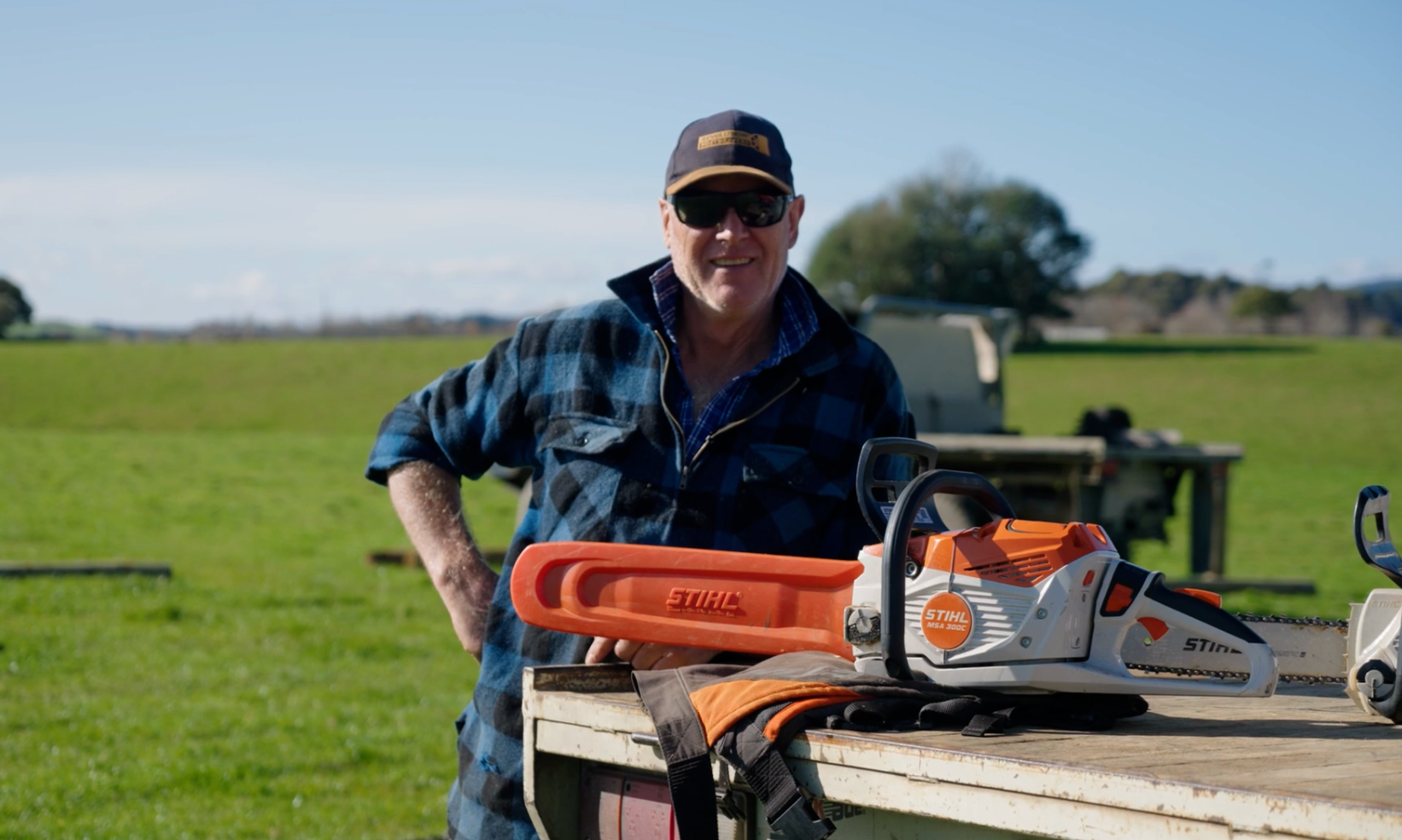
Running a side shift Post Driver on a skid steer / tracked machine
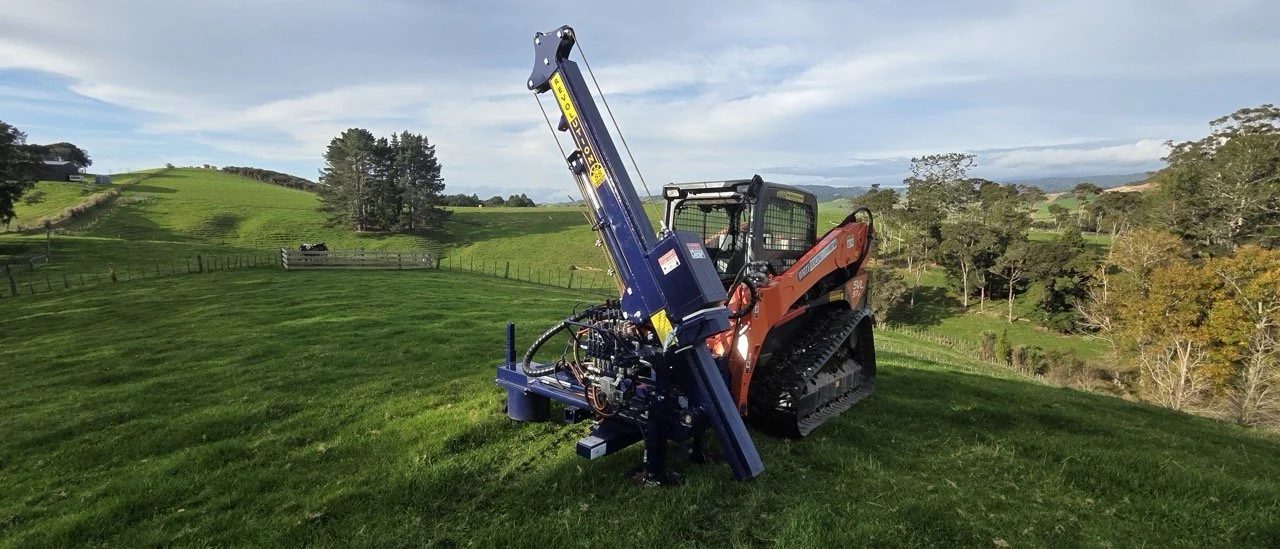
Revolution Telescopic SS Mounted to our Kubota Skid Steer
It was a natural fit. I put our side-shift rammer onto a skid steer expecting the weight to be the problem, and it was not. It positions well, it is quick down a line, and it ends up sitting where a rotational would sit most of the time. Here is what it mounts to, what it reaches, how much of a rotational's work it covers, and the jobs it will not do at all. That last part is the bit that decides which machine you want.
How the SS goes onto a skid steer
It mounts in close to the hitch, and where the weight ends up matters more than how much of it there is.
The SS is the heavier machine in our range, and most of the extra is the counterweight it carries. So weight was the thing I expected to cause trouble. It did not, and the reason is where the mass ends up rather than how much of it there is. On the other models the weight sits out in front. The SS tucks in tight against the hitch instead of hanging off the nose, and the weight displacement was nowhere near as alarming as I thought it would be.
The Telescopic SS goes on a tractor or a skid steer, and the only difference between the two is the mounting plate and the length of the top link ram, the hydraulic arm that sets the mast angle. The skid steer wants its own plate. Everything else is identical, and the changeover is a job of minutes rather than a workshop day.
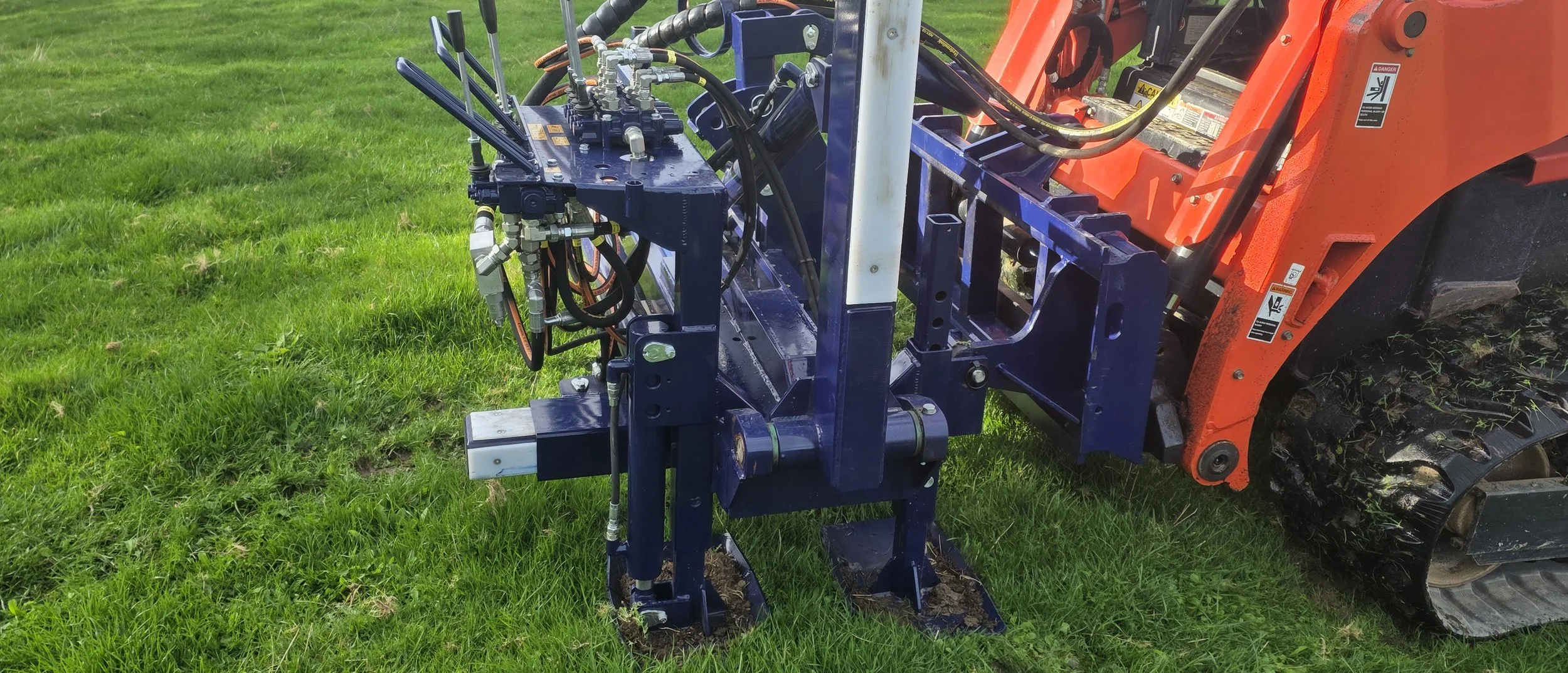
The SS fixes to the skid steer through a mounting plate
What positioning is like on a remote
Easier than I expected. The machine underneath does the aiming.
I run it with the skid steer on a remote, so I am standing beside the rig rather than sitting in the cab looking over my shoulder. You come at the post, and if you are not quite square you nudge the machine a few degrees. A skid steer turns on the spot. Do that once or twice and it has the effect of being on a slew base, which is the turntable a rotational sits on. I found it very easy to position, and I did not expect to say that.
It is not a slew base and I am not going to pretend it is. The base does not turn. But for the ordinary business of getting square on a post, the machine underneath does most of the job the base would have done.
Reaching posts without moving the skid steer
About a metre (3 feet) across the line, and more again fore and aft if you take that option.
The side shift moves the mast sideways across the line, roughly a metre (3 feet) of it, so you are not shuffling the machine forward for every post. There is an optional fore and aft movement on top of that, working at the head of the mast, which lets you move the mast forward and back without moving the machine either.
Between the two you are working an area rather than a point, and you work it from a machine sitting still. The measurements are on the Telescopic SS page.
Why it is quick down a fence line
Because everything is pointing the same way.
With the rammer side-mounted, your fore and aft movement, your track frame and the line you are driving are all working in line with one another. Nothing is fighting anything else. You work off the side of the line rather than over it, and down a straight run that is quick work.
A rear mount sits directly in line with the centre of the machine, which puts you over the line and means the machine has to travel where the fence is going. That has been the traditional arrangement in the American market for a long time, either a drop hammer or hydraulic hammer head or a rear-mount driver straight up the middle. A side shift puts you alongside the line instead. Work that way for a day and you feel it in the post count.
How much of a rotational's work it actually does
About 80% of it.
White Fencing has been my day job for more than thirty years and Revolution machines have been on my gear that whole time, so I can tell you where the mast actually sits while the work is happening, rather than where a spec sheet says it is able to go.
About 80% of the work we do with our rotational machines is run in the side-shift position. Base not rotated. Mast out to the side, driving down the line, the rotation sitting there unused. Which means a side-shift on a skid steer puts you in the same place a rotational would be, roughly four times out of five.
I have been asked whether that number climbs once you are on a skid steer, on the grounds that it spins on the spot and buys you a bit of extra reach. I have thought about it, and I would leave it at 80. I would rather you bought on a figure you can trust than on one I stretched for you.
What a rotational still does that this will not
Anything you have to come at end-on.
The base on the Telescopic SS side mount does not rotate, so you approach every post from one side. You cannot poke the mast end-on into an obstacle. You cannot get across the front of a 90 degree corner sitting in front of you, because for that you would need to be around the other way, and to get around the other way you would have to rotate the base. There is nothing there to rotate.
That missing fifth is not a matter of taking longer. The machine cannot reach it. If your fencing is full of corners, gateways, yards and tight ends, that fifth is worth paying for, and a rotational machine is what buys it. If you are putting in long lines, it barely comes up.
Working it in hill country
The Telescopic SS rammer sits below you, and you do not get to change your mind about that on the day.
The Telescopic SS is heavier than the Revolution rotationals and the base does not turn, so you cannot swing the rig around and keep the machine above the rammer on a slope. It goes downhill, every time.
Generally the going is fine. There will be the odd line where you are not comfortable having the rammer below you the whole way, and I would put that at around one line in ten, sometimes more, depending on your country. Rolling or flat and you will hardly notice it. On steep faces, think it through before you buy rather than after.
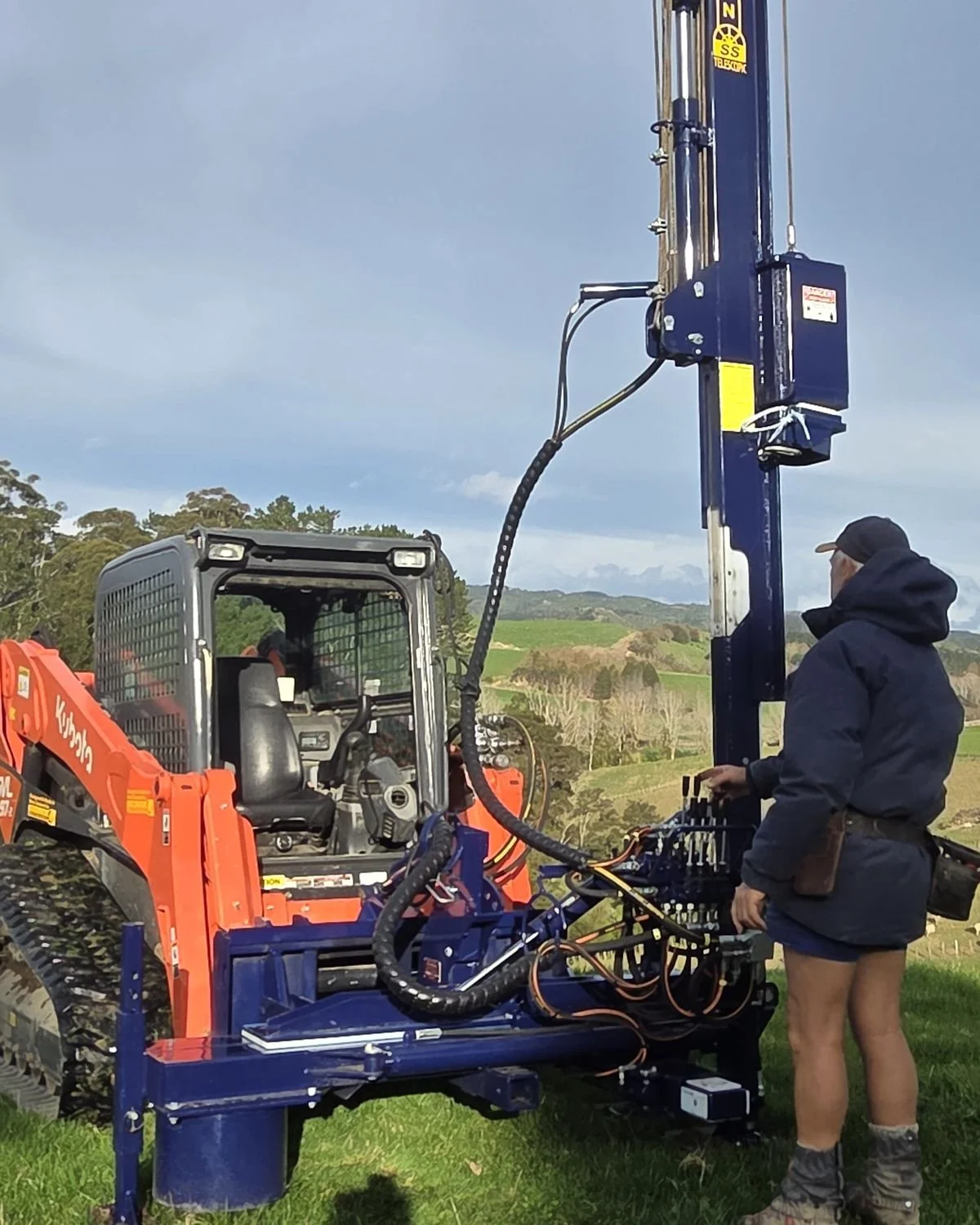
What size skid steer it takes
A 100 horsepower machine. Not smaller.
That is what it takes to run the Telescopic SS properly, and it rules out the smaller end of the market. Worth checking against the machine you already own, or the one you are pricing.
Who this setup suits
Two fellas, mostly.
The first already owns a side-shift rammer and is moving onto a skid steer. He does not need to be sold anything: he puts what he has onto the new machine and gets on with it. The second is pricing his way into the range for the first time, and of the two machines I have been comparing here the side shift is the lower price of entry.
The American market has traditionally run rear mounts, and I have been asked plenty of times why it now specifically wants a side shift on a skid steer. I do not know. I have never had a good answer for that one. What I can tell you is where the setup sits. Think of it as three rungs. A rear mount is the first, a side shift is the second, a rotational is the third. Each rung buys you a bit more of the job.
None of it is a dead end either. Our Revolution models swap between a tractor and a skid steer, so you can run the side shift on the new machine now, add a rotational later, and put the side shift back on the tractor where it carries on earning. That is the same argument I made about running your gear as one system rather than filling a shed with single-purpose machines.
Questions I get asked
-
Yes. Our Telescopic SS side-shift rammer mounts using its own skid steer plate, and it sits close to the hitch, so the weight tucks in against the machine rather than hanging out in front of it.
-
Easy. I have run ours on a skid steer myself, and it is easier again on a remote, where you are standing beside the machine rather than sitting in the cab. The base does not rotate, but a skid steer turns on the spot, so nudging it a few degrees does a good deal of what a slew base would have done.
-
About 80%. That is how much of the work we do with our own rotational machines is run in the side-shift position, so a side shift puts you in the same place roughly four times out of five. The other fifth is end-on work it cannot reach.
-
100 horsepower. Smaller machines will not run it properly.
-
Yes. The difference is the mounting plate and the length of the top link ram, the hydraulic arm that sets the mast angle. Everything else on the machine is the same.
If you want to talk through which of the three rungs suits your country and the work you take on, get in touch. That is a conversation worth having before you buy, not after. The full spec on the machine itself is on the Telescopic SS page.