Tracked post driver vs skid steer: which should you buy?
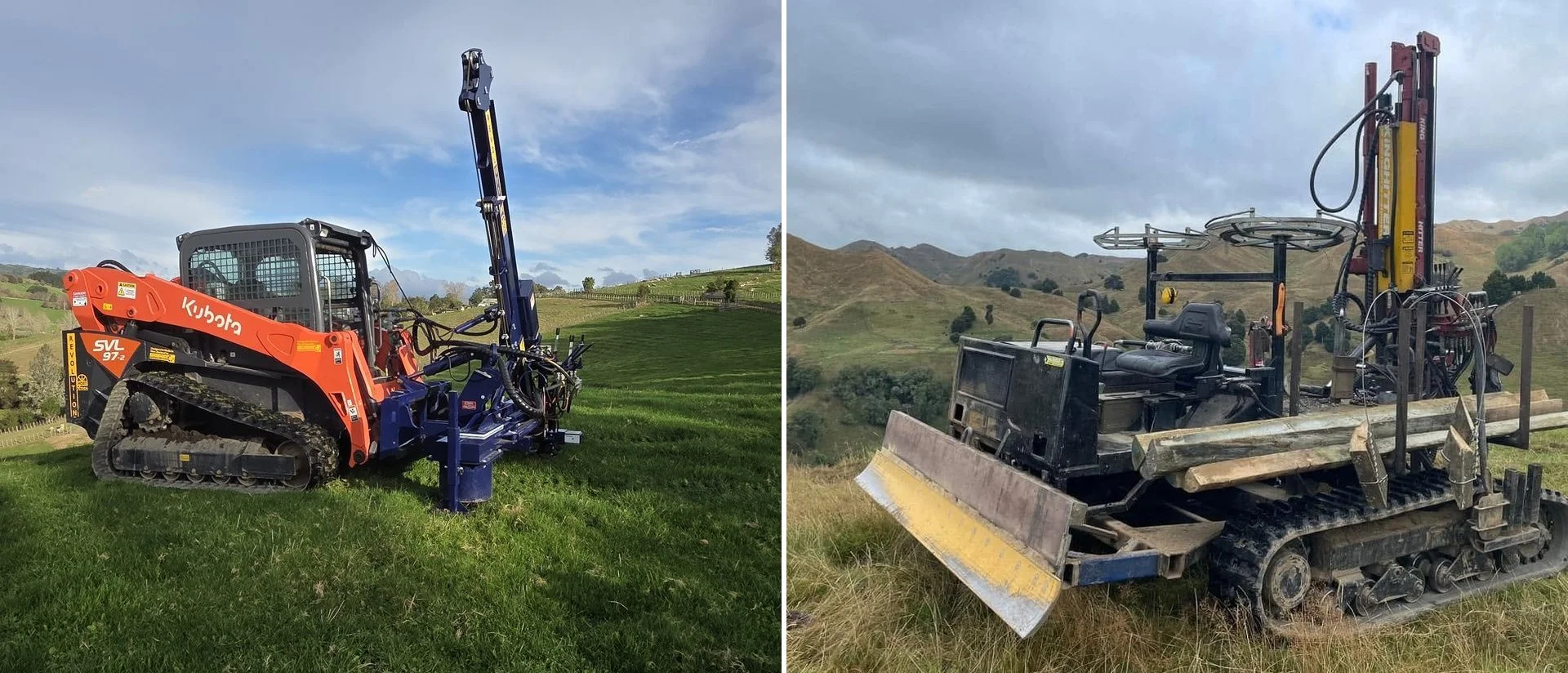
Left: Revolution SS on Kubota SVL97-2 skidsteer. Right: All in one tracked fencing machine (source: Mack Rennie Fencing, Facebook).
Adding a second post-driving setup, you have two ways to go. A skid steer running one of our rammers, or a dedicated tracked post driver, the self-propelled kind that walks the line on its own tracks. They drive posts about the same. So the decision doesn’t lie in their ability to drive posts. It’s about everything that surrounds that.
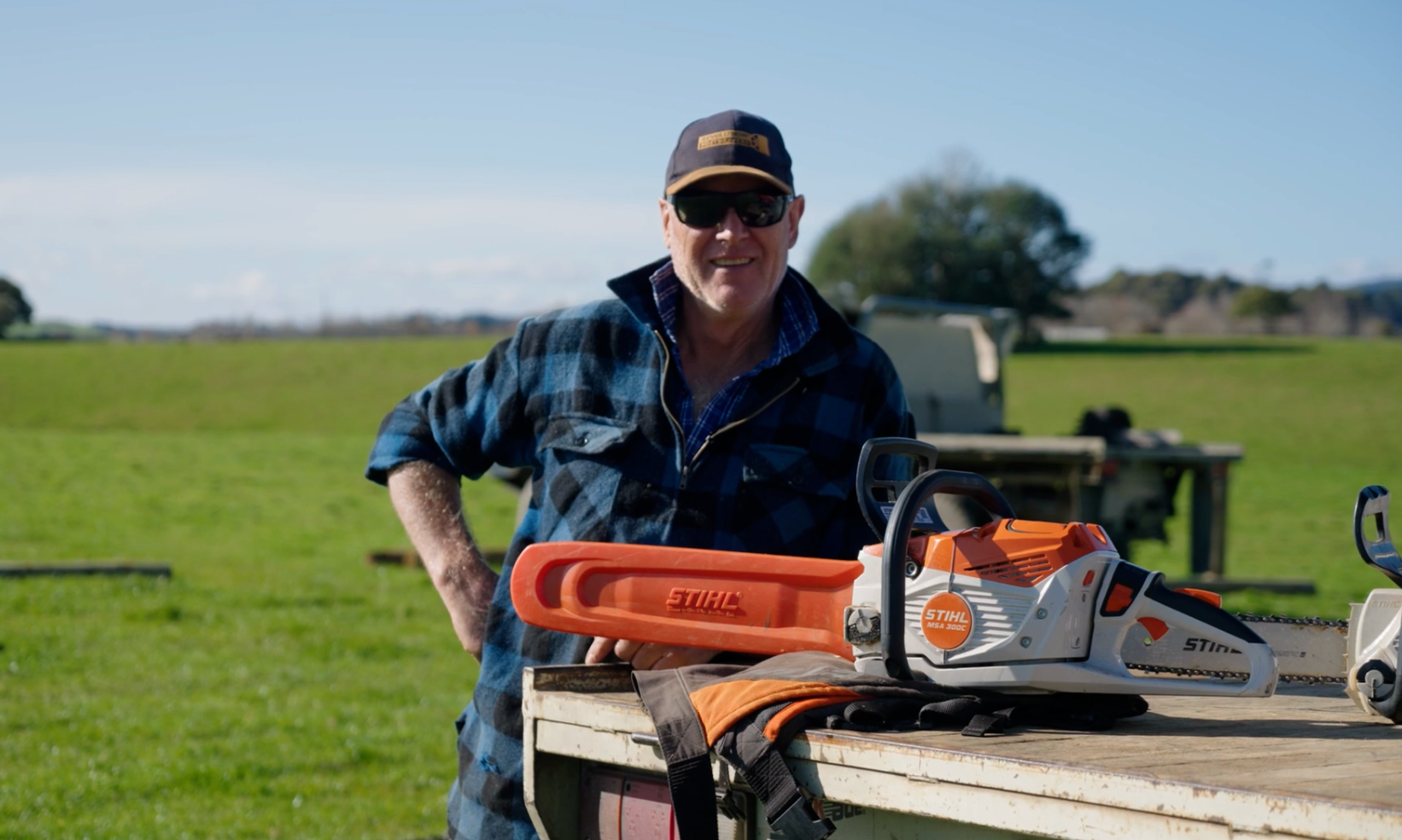
I’ve run both on my own jobs. I designed the first rotational post driver more than 30 years ago, and I still fence for a living through White Fencing. So this is a straight read from the fence line, and I’ll give the tracked machine its due where it earns it.
I asked myself this same question about fifteen years ago, when tracked machines were coming onto the market and we looked at putting one into the Revolution range. But for how I run a job, always trying to add dollar value, it never felt right being restricted to what one machine could do. Maybe it’s that New Zealand has always been a tractor country. Either way, a machine that takes a run of different attachments for different jobs made more sense to me.
What you are actually choosing between
Two different ideas of what a fencing machine is.
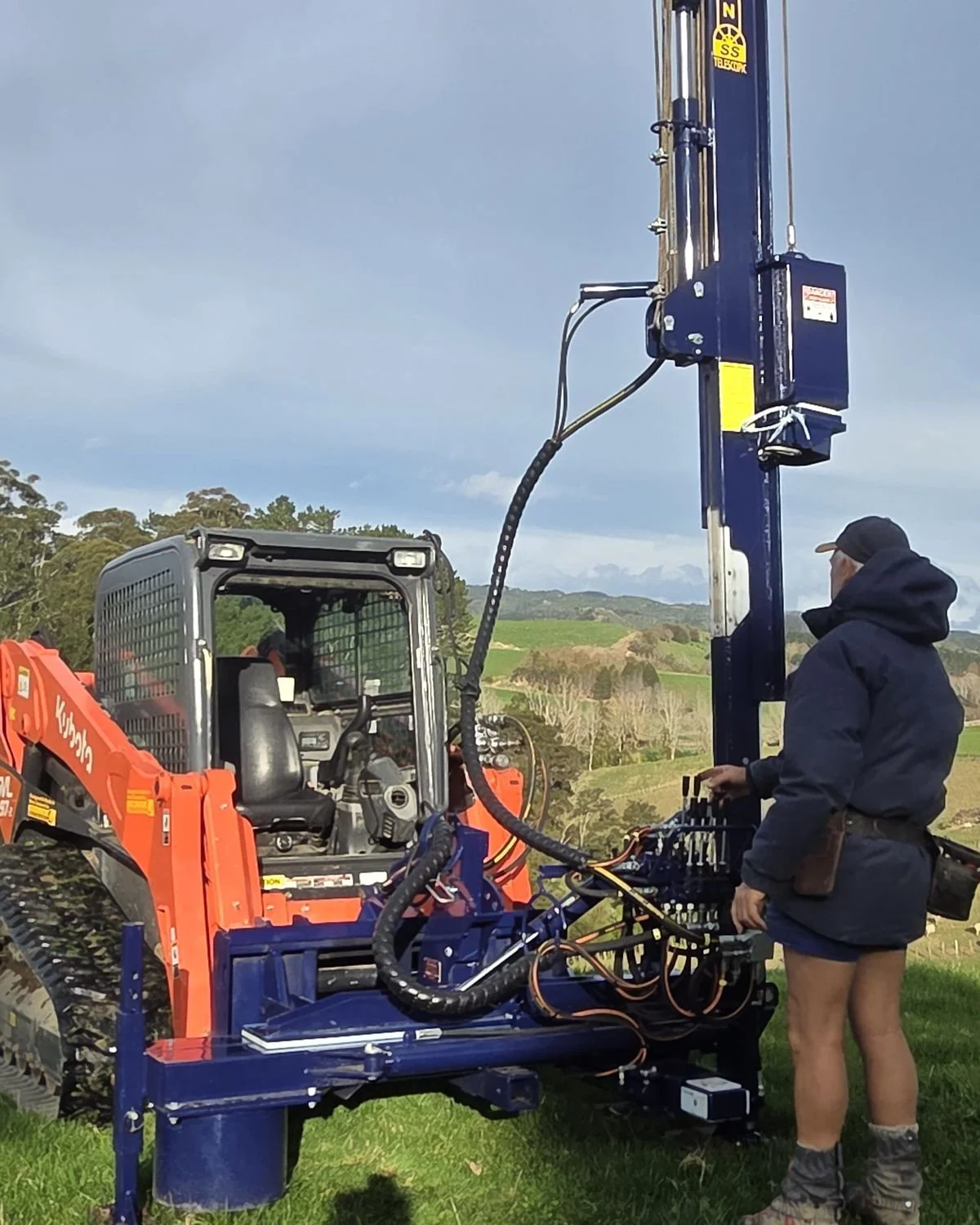
A skid steer setup is a base unit that takes 70-plus off-the-shelf attachments, with a tractor-style rammer bolted on the front that lifts straight off again. With our gear that’s usually the Swinga or the 180, and the SS side-shift rammer runs on one too. You can run it one-man, by remote, standing beside the machine rather than sitting in the cab.
A tracked post driver is one self-contained machine on rubber tracks. It walks the line under its own power, carries its posts on a rack, and you drive each one standing alongside. Turn the key and go, nothing to mount or swap.
So the tracked machine is a committed post driver. It carries its posts and tools, but it’s built for the one job. The skid steer is a rammer on a machine that does a lot more than fencing. That difference is what the rest of this comes back to.
Do they drive posts equally well?
Yes. On post-driving alone there’s basically nothing in it. A tracked post driver and a skid steer with one of our rammers on it are bang on equivalent for putting posts in the ground, give or take how the rotational action and hammer impact handle the ground you’re working, which varies with conditions.
Both stand you alongside the machine. Both move to the next post on a lever pull. We average around 70 posts an hour one-man with the remote setup, and a tracked machine keeps pace on the day. So if post-driving were the whole job, you could buy either and be happy. It isn’t, so read on.
Tracked post driver vs skid steer at a glance
| Tracked post driver | Skid steer + rammer | |
|---|---|---|
| Driving posts | Capable, one-man | Capable, one-man, equivalent |
| Posts per hour | On par | Around 70/hr, one-man by remote |
| Carry posts and drive in one pass | Yes, on a rack | Yes on the 180; the Swinga and SS pre-lay |
| Front-end loader work | Big models only | Yes, a core job for it |
| Earthworks, benching, track work | No | Yes |
| Off-the-shelf attachments | It drives posts | 70-plus |
| Carry and lift | Posts on the rack | Carries 3 t, lifts 4 t |
| Other income on the same job | Fencing | Benching, tracks, culverts, cleanup |
| Resale | Sells as one dedicated machine | Rammer and skid steer sell on their own |
What else the skid steer does on the job
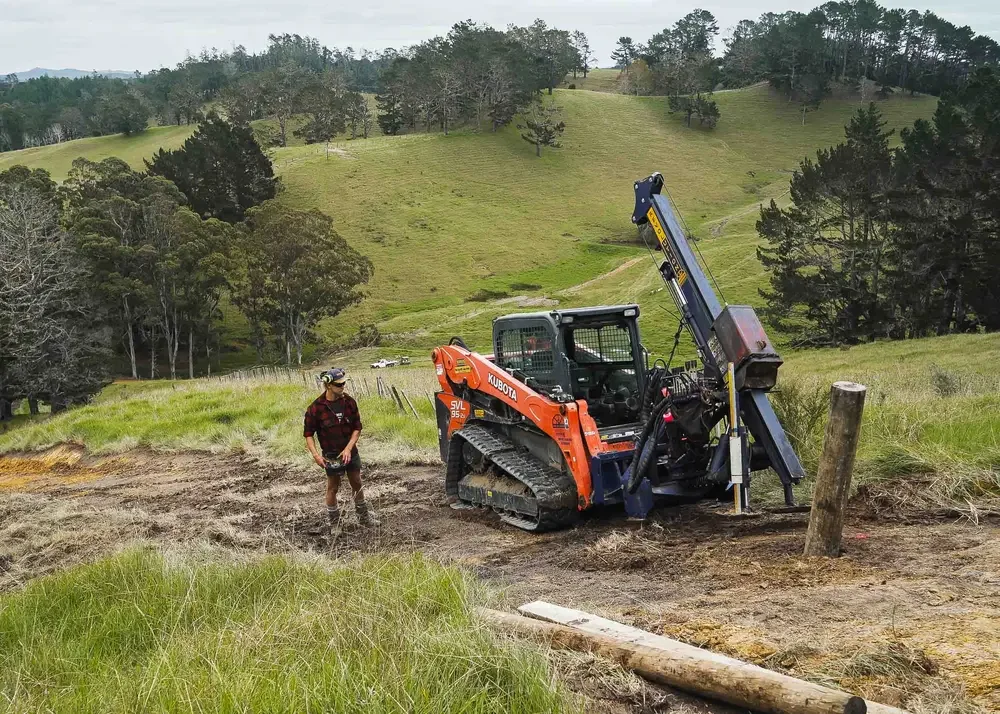
This is the biggest thing in it. A tracked machine drives posts, and that’s most of a fencer’s day, fair enough. A skid steer drives posts and then does the rest of the work as well.
It takes 70-plus attachments off the shelf. Take the rammer off, put on a bucket, a blade, a trencher, an auger, a set of forks. On the same property, on the same day, you can bench a hill, cut an access track, put in a culvert, mow the vegetation off a line, then drive your posts. If the farmer wants a track graded while you’re there, you throw the blade on and you’re away. The dedicated machine sits on the trailer while that happens, or you wait on a digger to turn up.
Where a tracked post driver genuinely wins
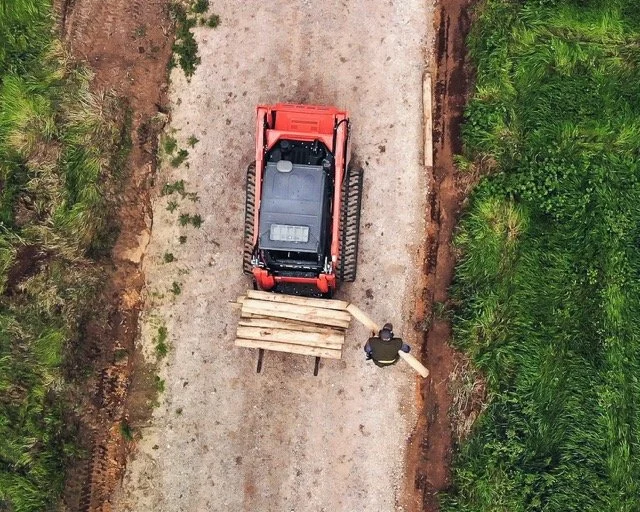
Simplicity, and being one machine. A tracked post driver is turn-key: start it, nothing to mount, nothing to swap, and it walks the line under its own power. If your work is post-driving and little else, that’s a clean answer, and you don’t have to own or run a skid steer to get it. On the bigger models there’s a front-end loader too, around 1,500 kg, for lifting fence material off the ute.
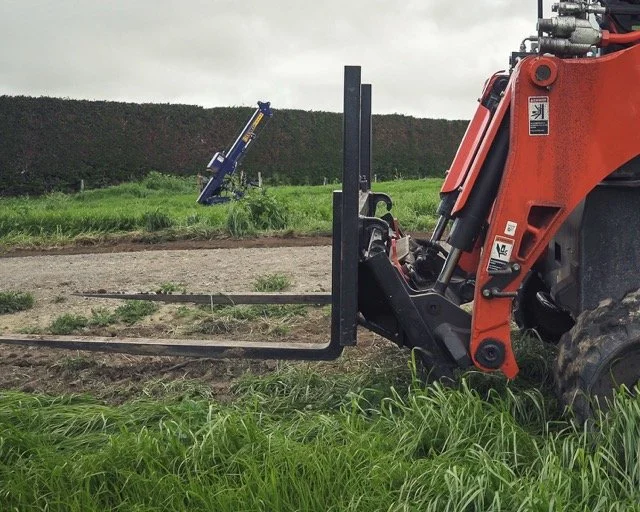
It also carries its posts on a rack and drives them as it goes, no separate lay-out. But that only counts against a Swinga or an SS, not the 180. Those two don’t take racks, so you pre-lay: drop the rammer, pick up the forks, run the line laying your gear out, then swap back and drive. The 180 does take racks and a tool tray, the only model in our range that does, so on a 180 you carry your posts and gear down the line and drive as you go, same as a tracked machine.
And where you are pre-laying, it’s smaller than it sounds. The forks-to-rammer swap is three or four minutes. Plenty of the time the gear’s already out for you anyway, on the bigger contracts and most farms. A lot of us run a second tractor alongside as well: it lays out the first stretch, then gets into driving strainers while the skid steer works up behind it. Two machines, one man on each, moving together. So the rack is a genuine edge on a Swinga or an SS, and rarely a deal-breaker.
Resale, and what happens when you upgrade
The skid steer setup holds its value better, and the reason is that same versatility. A Revolution rammer unhooks straight off the skid steer and onto any tractor. So when you upgrade, the rammer and the skid steer each sell on their own. A skid steer sells to a landscaper, a farmer, a builder, someone in civil work, another fencing contractor. The rammer sells to any professional fencer.
A worn dedicated machine sells as what it is, a post driver, into a much smaller market, and they’ve usually had a hard life by the time they come up. Two assets with wide markets give back more than one specialist machine with a narrow one, so the depreciation on the skid steer setup runs lower. If that’s part of your sum, have a read on resale and secondhand value before you commit.
What each one costs
A tracked post driver is one big single-purpose outlay. A skid steer is a machine you may already own, or one that earns across every other job on the property, with a rammer on top that costs a fraction of a dedicated machine. Line up a tractor and rammer plus a skid steer and rammer against a tractor and rammer plus a dedicated machine, and the skid-steer route usually lands lower on capital, with the attachment work on top of that.
Those are the shapes, not a quote. When you get to the actual numbers, and want to see it as a monthly repayment rather than a sticker price, have a look at finance options.
Which should you buy?
Go the tracked post driver if your work is post-driving and little else, you don’t run a skid steer for anything else, and you want one turn-key machine with nothing to mount or swap. On a straight post-driving operation it’s a capable one-man answer.
Go the skid steer and rammer if you want one machine that drives posts and also does the earthworks, benching, track work and material handling around the job, and you want to charge for that extra work. It leans further your way if you already own a skid steer, and if your ground is rough or tight enough that benching your own access earns its keep.
Frequently asked questions
Tracked post driver vs skid steer: which is better for steep hill-country fencing?
Both handle hill country. A tracked machine walks the line on its own tracks, which suits open steep paddock where it can get a run at the fence. A skid steer carries and lifts, and it can bench a track or level a pad to get itself in, so on rough or tight access it makes its own way. On the steepest sidling ground, keep the working weight of whatever you’re running in mind.
Can one person run either setup on their own?
Yes, both are genuine one-man machines. A tracked post driver is self-propelled, so you walk alongside and drive each post without a second person. A skid steer runs one-man by remote, where you work beside the machine rather than in the cab. We average around 70 posts an hour that way.
I already own a skid steer. Does that decide it?
It weighs it heavily toward adding a rammer rather than buying a dedicated machine. If the skid steer’s already earning on other work, the only new outlay is the rammer, so you get post-driving for a fraction of a dedicated machine’s price and keep everything the skid steer already does for you. Worth pricing both ways before you commit.
Do I have to pre-lay posts with a skid steer, and how much does it slow me down?
Only on the Swinga and the SS, and not by much. Those have no racks, so you lay your material out first, then swap and drive, three or four minutes on the swap. The 180 takes post racks and a tool tray, so on a 180 you carry your posts down the line and drive as you go, with no separate lay-out. On bigger jobs you can run a second tractor laying out alongside while you drive. So if that carry step matters, the 180 removes it.
The Decision: A post driver, or a system?
A tracked post driver is a post driver. A skid steer is a system. That’s the difference. Both put posts in the ground just as well, so once you set the driving aside, the question is whether you want a machine that drives posts, or a machine that drives posts and runs the rest of your job too.
If you’re weighing one up, it’s worth thinking of your fencing gear as a system rather than one machine at a time. And if you want to talk it through against your own setup, I’ve spent 30 years on the fence line working this out.