Revolution Postdrivers Setup Video Library

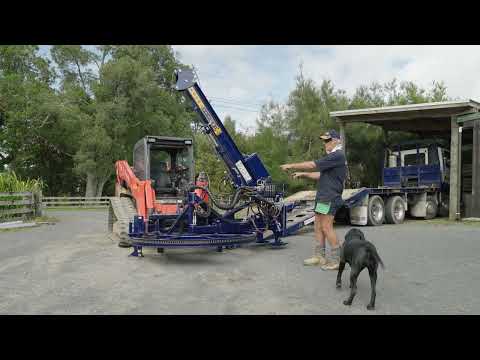
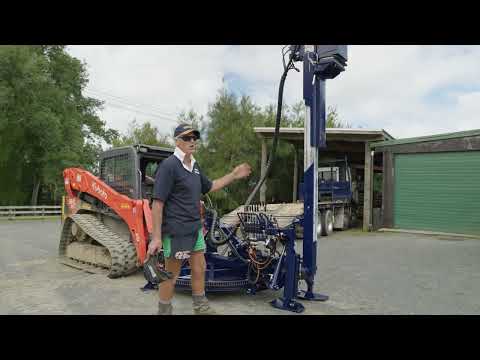
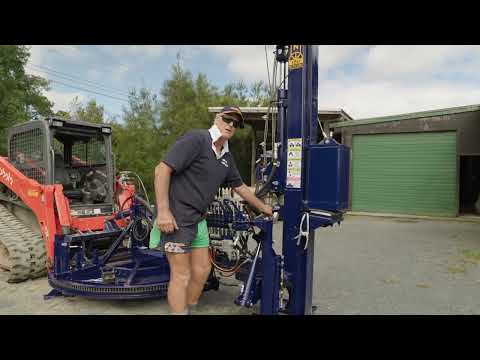
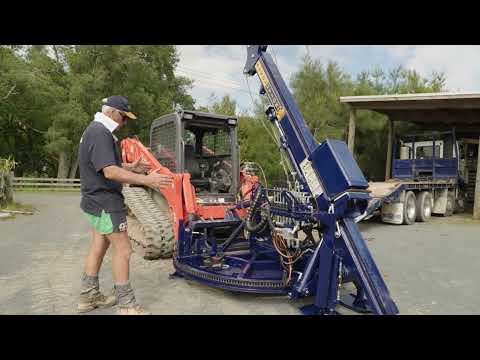
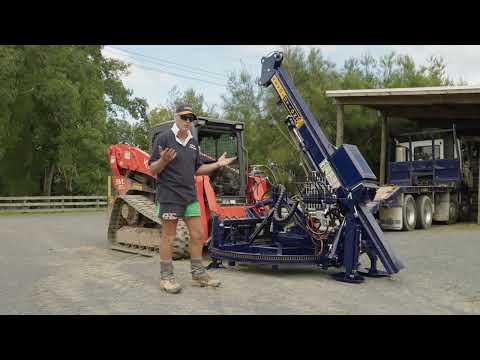
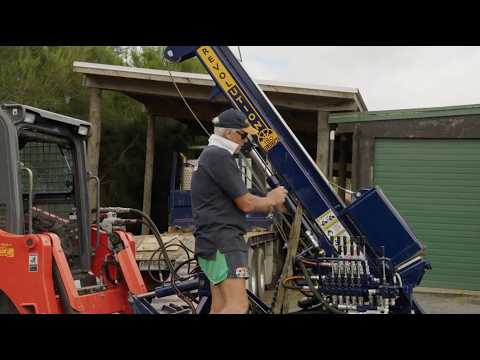
Everything you need to set up, connect, and operate your new Revolution Post Driver — organised into short, focused videos by Tony White. Use this page as your go-to reference whenever you need a refresher on any part of the machine.

  • Daily Maintenance & Pre-Start Inspection Checks
    • 8/13/26

    Daily Maintenance & Pre-Start Inspection Checks

    Everything you need to grease, oil, and visually inspect every day to keep your Revolution running safely and reliably. Tony covers all grease nipple locations (mast sides for wear pads, main hinge pin, angle ram pins, stroking leg ram, large rotation hinge pins), daily oil application points using chainsaw bio-lube (mast face, wire rope, side-shift plastics, ram ball ends), weekly rotational chain lubrication, and the keeper bolt visual inspection routine.

  • Post Cap Safety — The Rope Slack Warning

    Post Cap Safety — The Rope Slack Warning

    A focused safety briefing on how rope behaviour between the hammer and post cap can become dangerous if not actively monitored. Tony explains why the rope going slack as the cap meets the post often causes it to fall free — which is generally fine and even preferable — but warns that on a leaning mast (e.g. working on contour), the rope may not clear and can carry the post cap with the hammer stroke, releasing the post unexpectedly.

  • Setting Mast Angles Using the Independent Angle Ram
    • 8/13/26

    Setting Mast Angles Using the Independent Angle Ram

    How the Revolution's independent angle ram provides up to 20 degrees of mast tilt in both directions — specifically in mid-mount position where the top link is not available for angle adjustment. Tony explains how this allows you to drive plumb posts even when the carrier machine is sitting on a significant slope, and notes that combining the angle ram with simultaneous side-shifting can further extend your effective working angle range.

  • Managing Rotation, Ground Clearance & Stability on Slopes
    • 8/13/26

    Managing Rotation, Ground Clearance & Stability on Slopes

    How to use the top link and hydraulic stabiliser legs together to rotate the machine freely, maintain ground clearance, and stay stable on uneven or sloping terrain.

  • Wire Rope Care — Understanding & Preventing Rope Memory

    Wire Rope Care — Understanding & Preventing Rope Memory

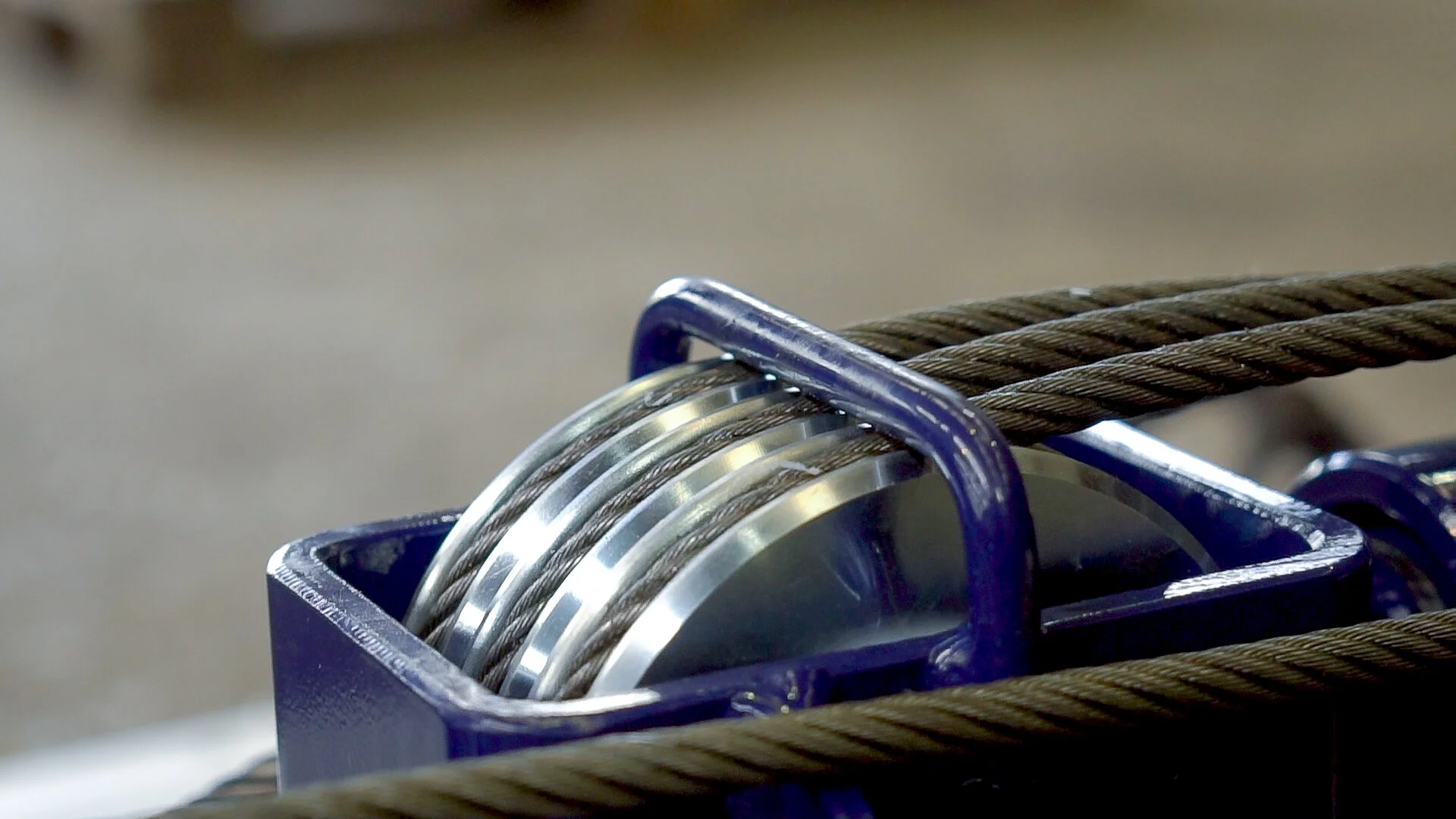
    What rope memory is, how it develops, and why it causes ongoing problems with pulley tracking. Tony explains the two main causes: rope forced sideways through a pulley under load (e.g. fouled on a tree branch), and slack rope laying on a hillside between hammer strokes. Both result in a permanent bend that causes the rope to continually want to displace from the pulley. Keeping ropes taut, free of fouling, and well-oiled is the key preventive measure.

  • How to Remove and Refit the Hammer & Post Cap

    How to Remove and Refit the Hammer & Post Cap

    A full walkthrough of safely detaching and reattaching the hammer and post cap — useful for long road travel, working on undulating terrain, deadman anchors, driven footings, or using the mast as a lifting device. Tony covers the correct mast height and body position for safe handling,.

  • Using the Telescopic Mast Safely — Do's and Don'ts
    • 8/13/26

    Using the Telescopic Mast Safely — Do's and Don'ts

    How the telescopic mast works, its full capability, and the habits that keep it safe and undamaged. Tony covers the UHMWPE wear pad system and why the M6 stainless Allen key cap screws must be checked regularly. He also demonstrates how quickly the mast collapses, the correct practice of collapsing it before moving between posts, and the use of the safety pin and holster when traveling any significant distance on site.

  • Understanding & Adjusting the Hammer Valve Port Relief
    • 8/13/26

    Understanding & Adjusting the Hammer Valve Port Relief

    An explanation of the aluminium port relief block on the hammer valve and why it is essential for protecting seals and rope under sudden pressure spikes. Tony covers how the spring-loaded needle valve diverts oil into the exhaust manifold when flow is stopped abruptly, how to adjust relief pressure using an 8mm Allen key and 19mm lock nut if hammer speed drops, and why you must always confirm the relief is cracking active before locking off — a short drop on oil should be audible.

  • Configuring the Valve Bank to Match Your Preferences
    • 8/13/26

    Configuring the Valve Bank to Match Your Preferences

    How to customise valve activation direction and position to suit your instincts or match your previous machine setup. Tony explains how to reverse the A and B ports on any valve by swapping the two hose fittings, how to move functions between valves by relocating hoses, and how to cross-ply hoses between the top and bottom valve banks. Important: the hammer valve is the one exception — it is a fixed, one-way pull-to-rise valve and cannot be changed.

  • Reducing Machine Height for High Bed Transport
    • 8/13/26

    Reducing Machine Height for High Bed Transport

    How to reduce mast height to approximately 2.9–3 metres for transport on a high bed truck or trailer. Tony walks through the four-hole pin system that controls mast tilt angle, the technique for neutralising load in the angle ram before moving the pin, and safe use of the safety pin as a displacement pin during the adjustment. Key note: loctite must be replaced every time the keeper bolt is removed. Skid steer setups run in the far hole; tractor setups use the second hole in as primary.

  • Attaching the Post Driver to a Tractor

    Attaching the Post Driver to a Tractor

    How to connect the post driver to a tractor without a second person. Tony explains how to connect the hydraulic hoses first, then use the machine's own valve bank to operate the top link ram independently — extending it onto the tractor, pinning it, and using tractor draft to pull the lower arms into alignment. Also covers using the hydraulic plow arm (SS model) -to align and pin the far lower arm without hammering or guesswork.

  • Attaching the Post Driver to a Skid Steer

    Attaching the Post Driver to a Skid Steer

    An overview of how quickly the post driver connects to and disconnects from a skid steer, and what makes that possible. Tony demonstrates the speed of the attach/detach process, introduces the adaptor face plate that makes all Revolution models interchangeable with a skid steer, and explains the one key difference when swapping between skid steer and tractor setups — the top link ram length.

  • Safe Storage When the Machine is Not in Use
    • 8/13/26

    Safe Storage When the Machine is Not in Use

    How to leave your post driver safely for days, weeks, or longer without risking instability. Tony explains why the rear-mount triangular position is the only safe storage configuration, the importance of fully retracting all hydraulic rams before disconnecting oil supply to avoid pressure creep, and when to place a timber block under the adjustable foot if it retracts higher than the static leg.

  • How to Safely Load, Unload & Lift the Post Driver
    • 8/13/26

    How to Safely Load, Unload & Lift the Post Driver

    Step-by-step guidance on safely lifting and moving the post driver using rated lifting straps and forks. Tony explains the correct strap wrap and choke technique to find the machine's natural balance point, the right fork approach angle (from the side, not the end), and key safety protocols when operating at 1.4 tonnes under movement.

  • Receiving & Securing Your Post Driver for Transport
    • 8/13/26

    Receiving & Securing Your Post Driver for Transport

    What to expect when your Revolution Post Driver arrives, and how to correctly tie it down for transport. Tony covers the machine's stable mid-mount (triangular) footprint on delivery, the correct three- to four-strap load binder technique for securing to a truck or trailer bed, and a critical note about keeping hammer rope slack before disconnecting hydraulic supply.